Defying Gravity and Design Norms
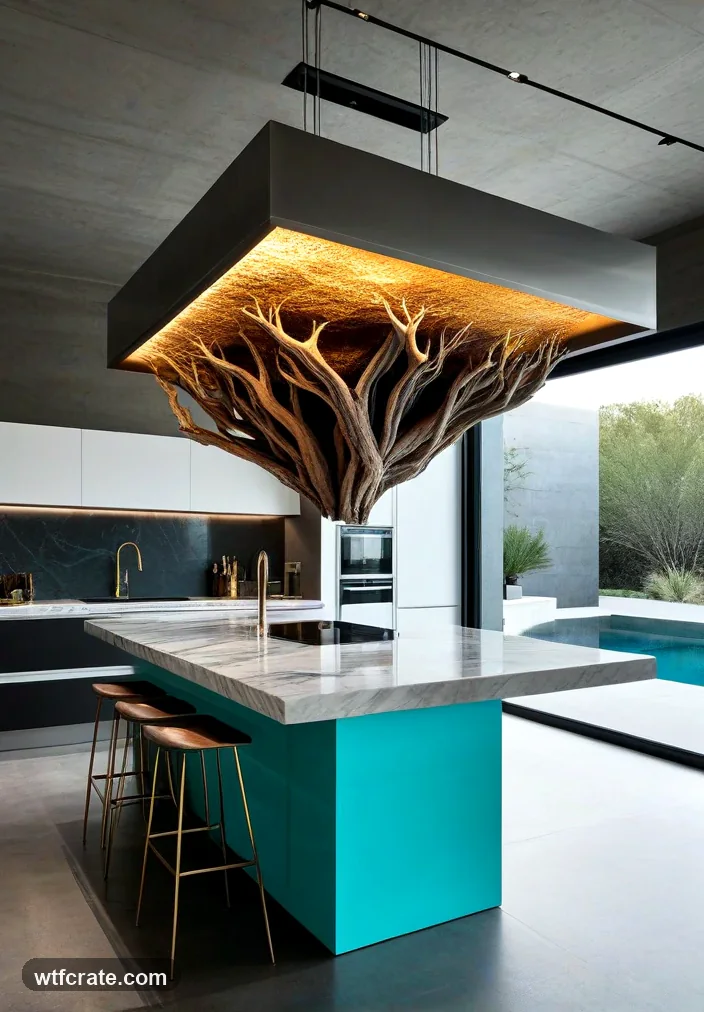
At first glance, this kitchen island looks like something straight out of a surreal dream—or perhaps a whimsical fantasy novel. Emerging from the ceiling, the tree-like structure seems to defy the laws of gravity and conventional kitchen design. Instead of the usual flat, horizontal surfaces we expect, this kitchen centerpiece is a towering silhouette that bends and twists, resembling the gnarled branches of an ancient tree.
The visual impact is immediate. The island’s trunk appears to be made of a material that is both solid and ethereal, with a texture that could be described as wood-like but with an almost glass-like sheen. This strange juxtaposition raises immediate questions: What is this made of? Is it real wood, or perhaps something more futuristic? The color palette leans toward earthy browns and greens, reminiscent of nature yet enhanced by an unnatural vibrancy that makes it pop against the backdrop of a typical kitchen.
Nature Meets Functionality (or Does It?)
What makes this concept truly fascinating is the way it challenges our notions of what a kitchen island should be. Typically, kitchen islands are designed for practicality—providing extra counter space and storage. But this design leans heavily into the realm of artistic expression. The absurdity of having a tree sprouting from your kitchen ceiling not only serves as a conversation starter but also offers a striking visual experience that most kitchen designs sorely lack.
Imagine preparing dinner while surrounded by this towering structure, its branches seemingly reaching for the ceiling lights. It creates an inviting atmosphere that might inspire even the most lackluster cooks to whip up something extraordinary. Or does it? While the idea is whimsically appealing, one can’t help but wonder about the practicality of such a design. Is it a workspace or just a beautiful object? Perhaps it’s both, or perhaps it’s simply a delightful distraction.
Visual Appeal and Design Inspiration
This tree-inspired kitchen island is a reminder that design doesn’t always have to prioritize function over form. It’s an invitation to think outside the box—or, more accurately, the kitchen. For those drawn to the unusual, other concepts you might search for include organic-shaped furniture, nature-inspired decor, or even biophilic design elements that bring the outdoors inside.
Additionally, consider exploring variations such as a kitchen island that mimics a waterfall, complete with flowing lines and shimmering surfaces, or one that appears to be carved from a single piece of stone, bringing a sculptural quality to the heart of the home. These ideas are grounded in the same playful spirit that this tree-like kitchen island embodies, encouraging us to reimagine our living spaces in unexpected ways.
The Future of Kitchen Design?
While we may not be rushing to install a tree in our kitchens anytime soon, this concept-style design opens the door to a world of possibilities. It suggests that kitchens can be more than just functional spaces; they can also be artistic statements that reflect our individuality and creativity.
This tree-like kitchen island is a bold reminder that design can be whimsical, thought-provoking, and even absurd—all while still being undeniably memorable. So, whether you’re a fan of quirky home decor or simply someone looking to refresh your kitchen aesthetic, this surreal concept serves as a playful inspiration that invites exploration.
Next Steps for the Curious
If this kitchen island caught your eye, you might also enjoy exploring other innovative design concepts that blend nature with everyday functionality. Look into floating furniture, nature-inspired wall art, or even lighting fixtures that mimic the forms of plants and trees. Each of these ideas can add a touch of the extraordinary to your home, proving that even the most mundane spaces can be transformed into realms of creativity and wonder.